Generator Inlet and Home Battery: How They Work Together in an Outage
A generator inlet lets you plug in a portable generator safely. Paired with a home battery, the battery runs the house and the generator only tops it up during long outages. Here is how the two work together.
TRU Off Grid · November 5, 2026
What a Generator Inlet Is
A generator inlet is a weatherproof plug mounted on the outside of your home. You run a cord from a portable generator to the inlet, and it feeds your backup circuits through a transfer switch or interlock. It is the safe, code-approved way to connect a generator to a house.
Plugging a generator into a dryer outlet with a homemade cord is dangerous. It can send power back down the utility line and hurt a line worker, and it can start a fire. An inlet installed by a licensed electrician under an ESA permit is the right way to do it.
The Battery Runs the House
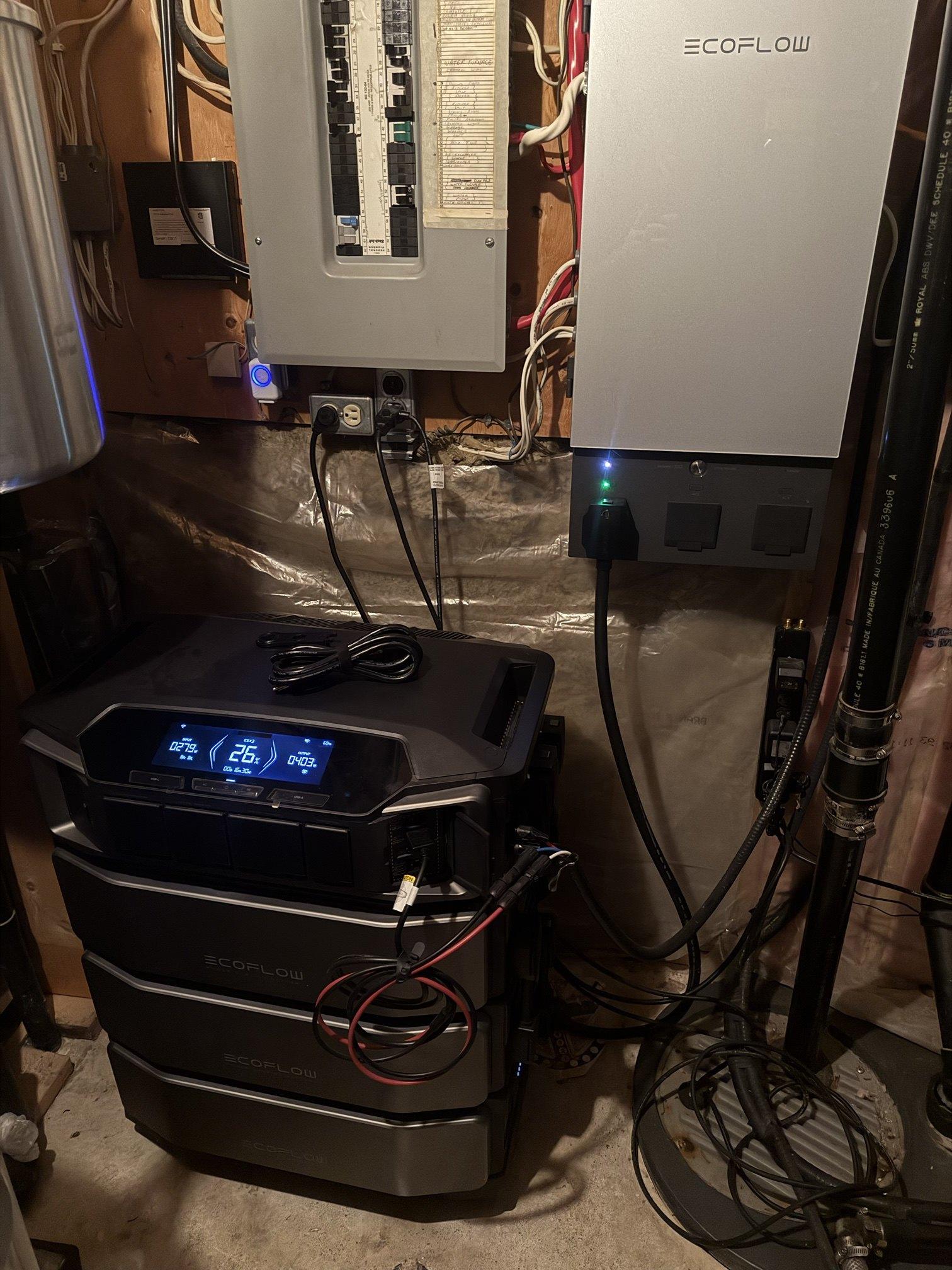
In a home with a battery backup system, the battery does the work. When the power goes out, your essentials switch to the battery with no noise, no fumes and no trip outside in the rain. In most outages, the battery alone carries you through.
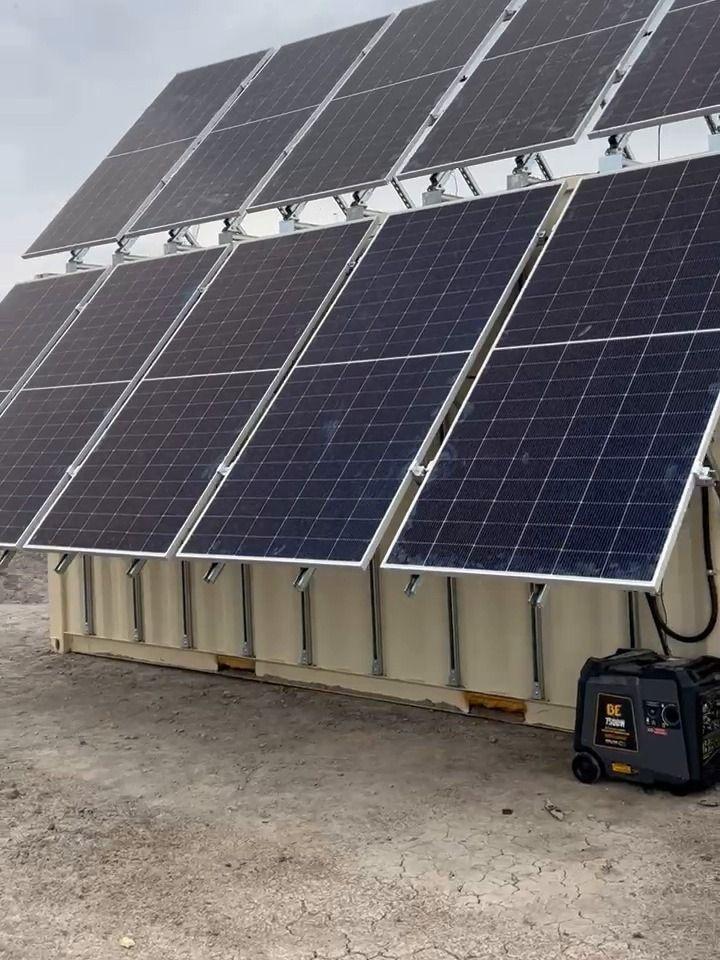
The generator is only the backup to the battery. It does not take over the house. It earns its place in the long outages, the multi-day storms when the sky stays grey and solar panels make little power.
How the Generator Tops Up the Battery
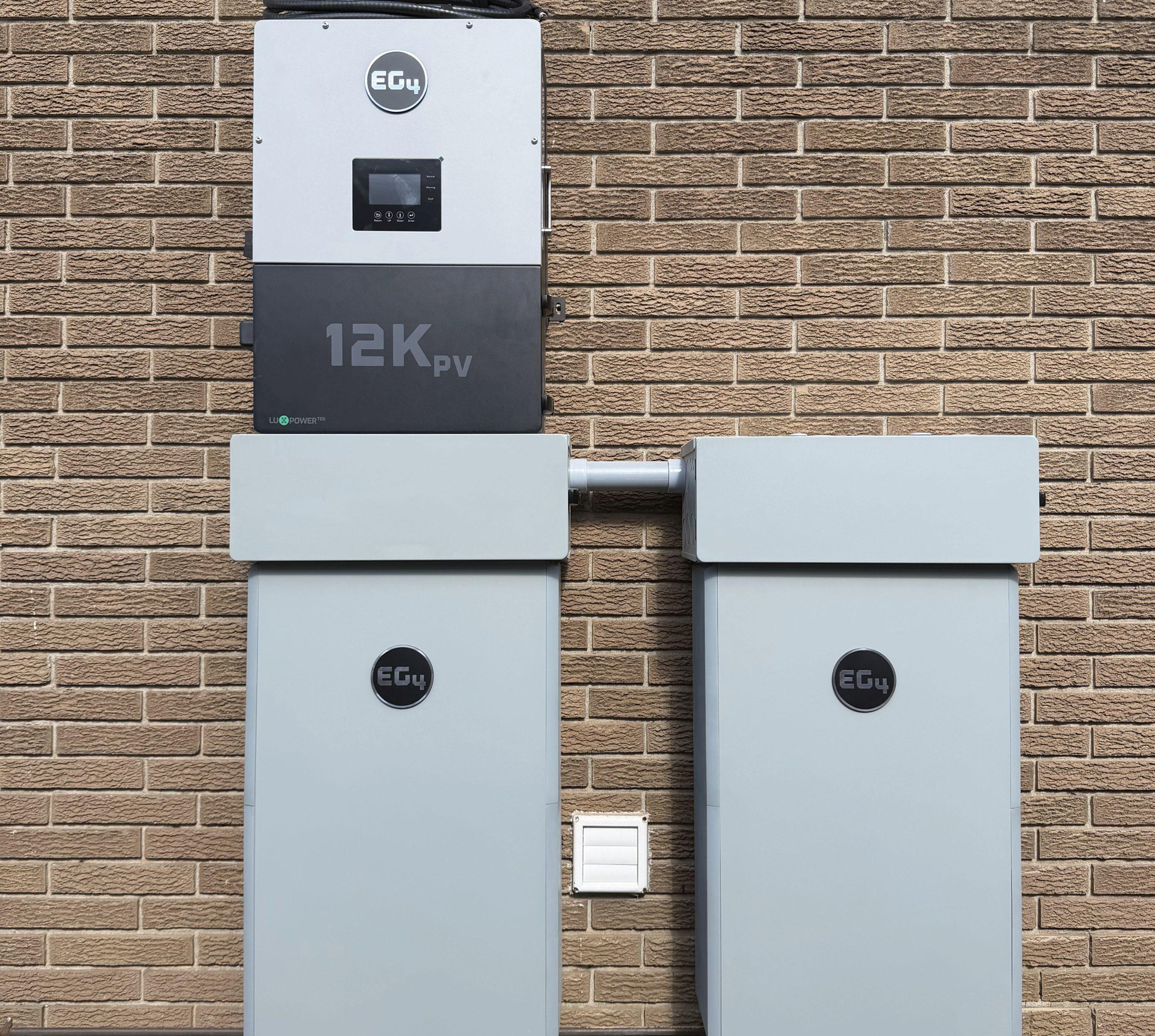
When the battery gets low in a long outage, you start the generator and it charges the battery while your circuits keep running. With an EG4 system, the inverter can start a compatible generator on its own when the battery drops to a set level and shut it off when the battery is charged again.
That means the generator runs for a few hours to refill the battery instead of running all night. You use far less fuel, and the house stays quiet most of the time.
Which Generator?
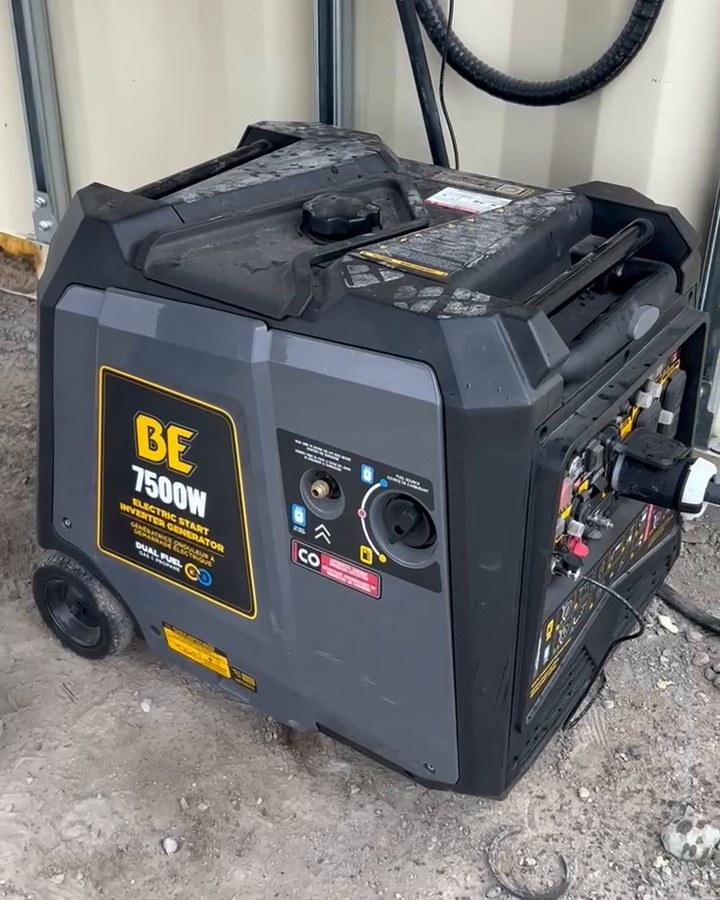
For most homes we pair the battery with a BE 7,500 watt inverter generator that runs on propane or gasoline. Larger homes and farms can step up to the BE 10,500 watt tri-fuel model. The 7,500 watt inverter model makes clean power that is safe for electronics and for the battery system.
What the Install Includes
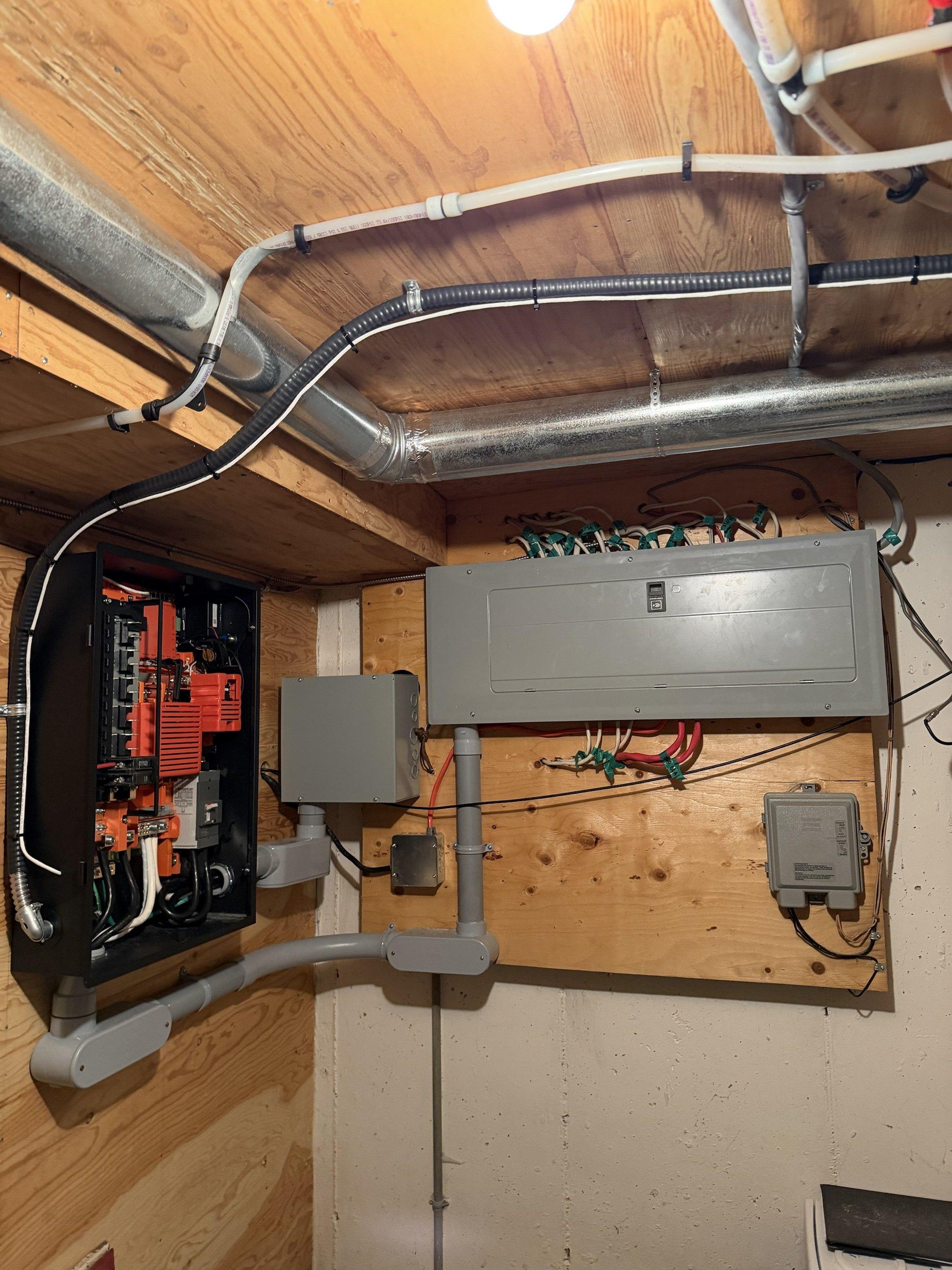
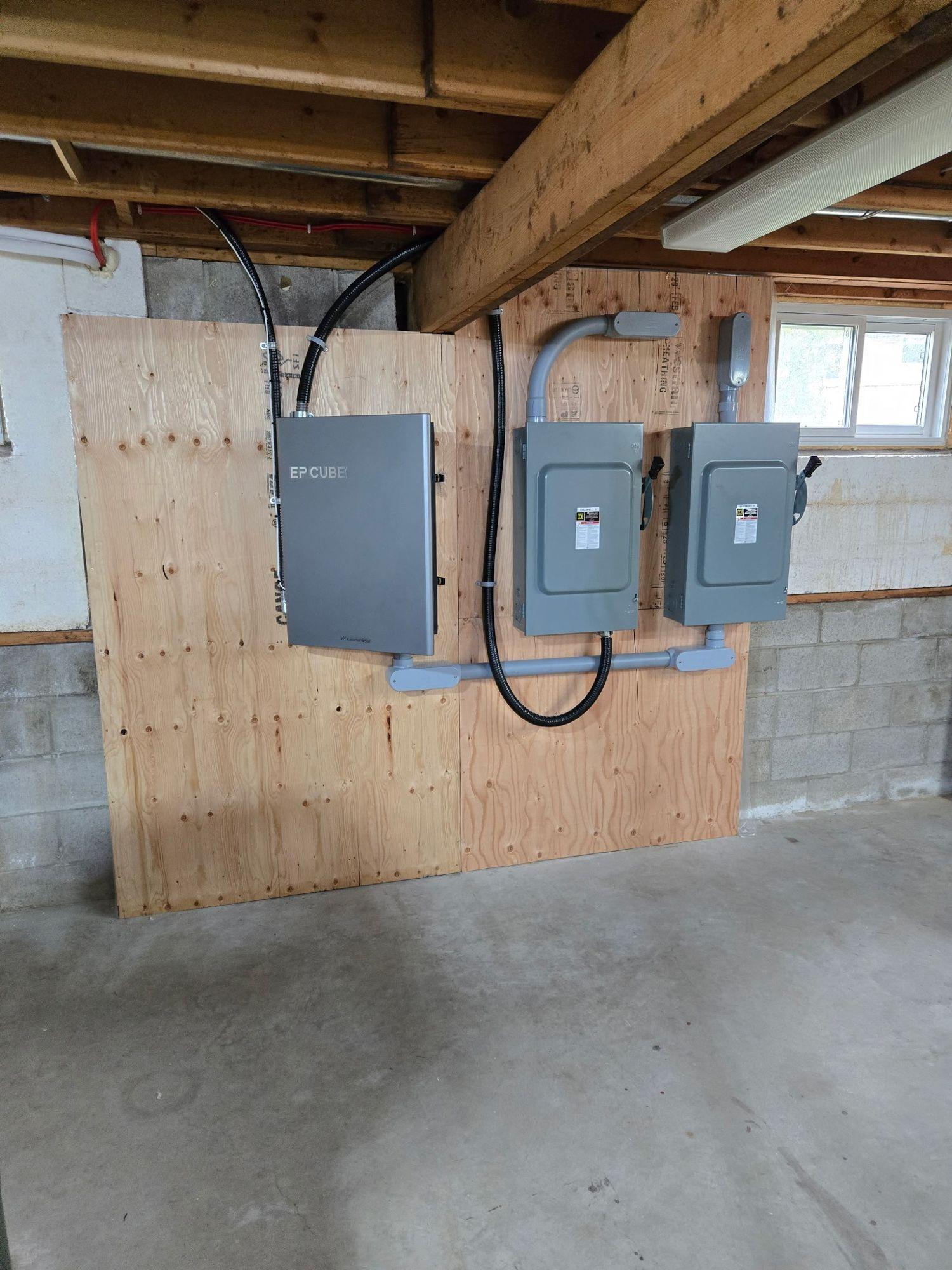
Our licensed electrician mounts the inlet outside, wires it to the battery system or a transfer switch, and the work is permitted and inspected by ESA. We size the inlet and cord to the generator, show you how to connect it, and test the whole setup before we leave.
Battery First, Generator as Backup
If you are deciding between a generator and a battery, start with the battery. It covers almost every outage on its own, and you can add an inlet and a generator later for the rare long ones. Read how much battery backup you need, see our EG4 whole-home backup kit, or ask TRU Electrical Services about an inlet.